Look, I bought the GreatCircleUSA 3-in-1 Wood Chipper Shredder Mulcher because my property has too many trees for a sane person to own and not enough budget for a commercial PTO-driven beast. I needed something that could handle branches, leaves, and the random pile of garden waste that accumulates whenever I pretend to be a gardener.
After running this thing for about 50 hours across a full season — spring cleanup, summer storm debris, fall leaf processing — I have a verdict. And it’s more nuanced than the Amazon reviews suggest.
The short version: the 3-in-1 design is genuinely useful when you understand what it actually does. The 7HP engine is the same engine half the chippers in this price range use. The build quality is solid for the money. But there are three specific things about this unit that the listing photos don’t tell you.
Check current price on Amazon →
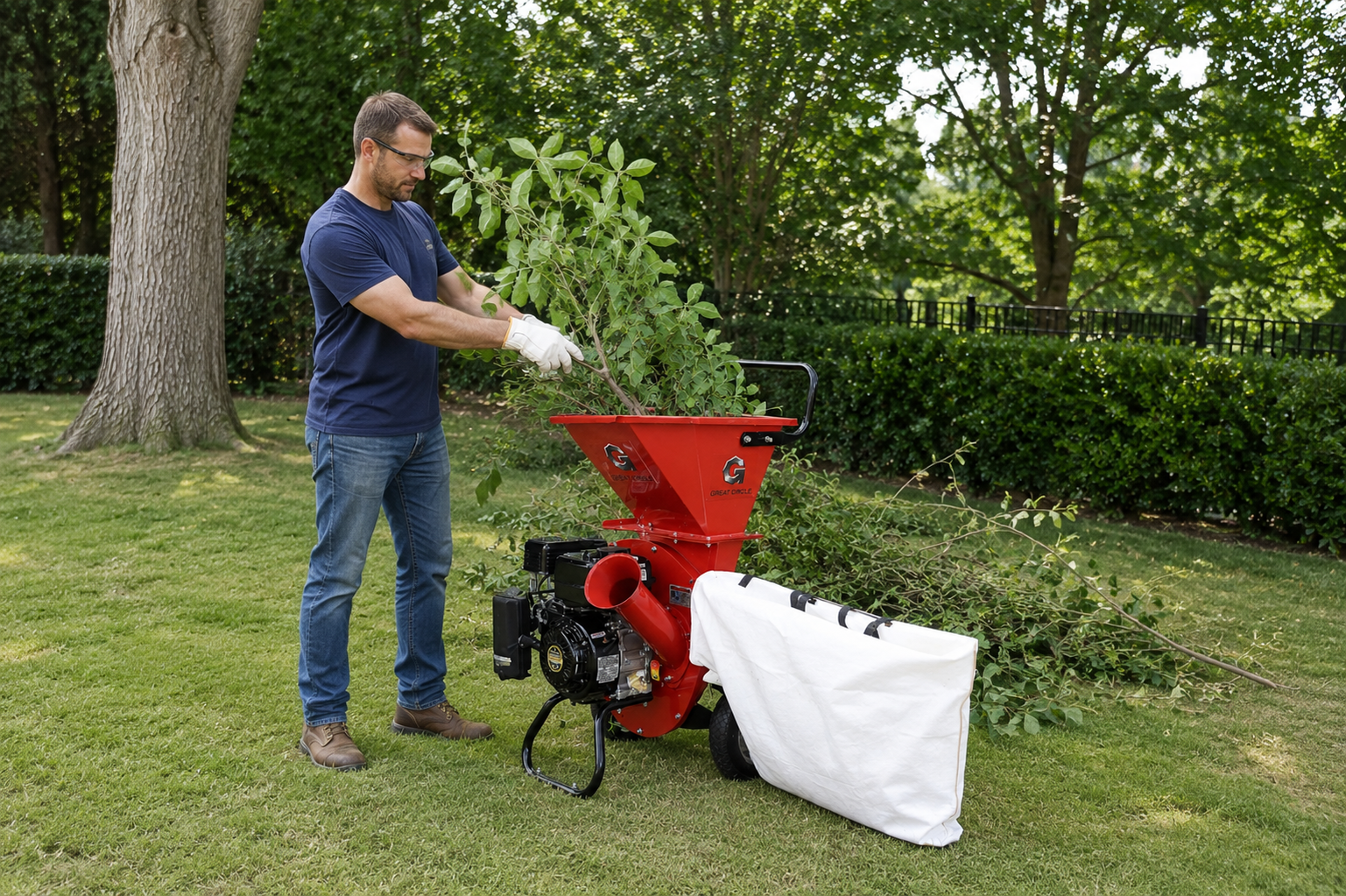
Table of Contents
Open Table of Contents
- Why I Picked the GreatCircleUSA Over the Other 7HP Chippers
- Specs Translated Into Real-World Terms
- Real-World Testing: A Full Season of Use
- The 3-in-1 Design Explained (Actually)
- Three Things I Don’t Love
- The Critical Maintenance Rule
- Who Should Buy This
- GreatCircleUSA vs the Competition
- First-Start Checklist
- After 50 Hours
- A Few Things People Actually Ask
Why I Picked the GreatCircleUSA Over the Other 7HP Chippers
Walk through Amazon’s chipper category and you’ll see roughly six different brands selling what looks like the same machine. SuperHandy, Landworks, GARDENBEAUT, EFCUT, GreatCircleUSA, and a couple of off-brands. They all run a 212cc OHV engine. They all claim 3” capacity. They all show similar pricing.
So why this one specifically?
The 3-in-1 design. Most chippers in this price range have one feeding point — usually the side chute. The GreatCircleUSA has three: a top hopper for shredding small material (up to 1/2” stuff), a side chute for branches up to 3”, and a vacuum inlet attachment point for leaf processing. That last bit only works if you buy the optional vacuum kit, but the infrastructure is built in.
CR12MoV blade steel. This is actually a meaningful detail. CR12MoV is a chromium-molybdenum-vanadium tool steel that holds an edge better than the generic high-carbon stuff some competitors use. In practice, longer blade life between sharpenings.
Vertical adjustable discharge chute. The discharge angles between 90° and 145°, so you can aim chips into a wheelbarrow, a tarp pile, or a truck bed without repositioning the whole machine. The fixed-chute units force you to move the chipper instead. Small thing, big difference over a season.
Tow bar compatibility. If you have an ATV or small tractor, there’s an optional tow bar kit. I haven’t used it, but knowing it exists matters if your property is big enough to need to move the chipper around.
For a broader category overview, my best chipper-shredder buyer’s guide covers all the major contenders at different price tiers.
Specs Translated Into Real-World Terms
| Spec | Number | What It Actually Means |
|---|---|---|
| Engine | 7HP AlphaWorks 212cc OHV 4-stroke | Standard workhorse engine, parts widely available |
| Max torque | 10.7 ft-lbs @ 2500 RPM | Notably higher than the 9.14 ft-lbs on some competitors |
| Max RPM | 3600 | Standard for this engine class |
| Fuel | 87+ unleaded, no ethanol | Non-negotiable — ethanol kills the carb |
| Fuel capacity | 0.7 gallons | About 2-3 hours of run time per tank |
| Top hopper capacity | 1/2” max material | For leaves, twigs, soft material |
| Side chute capacity | 3” max diameter | For real branches |
| Reduction ratio | 15:1 | Aggressive — fine chips for mulch/compost |
| Blade material | CR12MoV tool steel | Holds an edge longer than basic carbon steel |
| Discharge chute angle | 90°-145° adjustable | You can aim where chips land |
| Certification | EPA/CARB | Legal in California and other strict states |
| Weight | ~110 lbs | Movable by one person on flat ground |
The 10.7 ft-lbs torque rating is the spec that surprised me most. Most of the 7HP competitors in this class are rated around 9-9.5 ft-lbs. That extra grunt is noticeable when you’re feeding seasoned hardwood through.
Real-World Testing: A Full Season of Use
Test 1: Spring Cleanup (Mixed Brush)
Setup: 4-foot brush pile from winter pruning. Maple branches up to 2.5”, lots of small soft material from rose bushes and shrub trimmings, a few rotten chunks I should have just thrown away.
I ran the small soft stuff through the top hopper first. The hopper is generously sized — I could grab a double handful of pruning waste and dump it in. The blade grabbed everything and pulled it down without any kickback. A wheelbarrow of soft brush became maybe two coffee cans of fine shred.
Then the bigger branches through the side chute. The auto-feed worked on anything over about 1” diameter. For thinner stuff, I had to push it through with the included push stick. The maple chunks at 2.25-2.5” were handled fine — slowed the engine slightly, didn’t bog it.
Total: about 90 minutes of run time, full brush pile gone, half a wheelbarrow of usable mulch produced.
Test 2: Summer Storm Debris (The Real Test)
A late June thunderstorm dropped a 30-foot oak limb across my back fence. After cutting it up with a chainsaw, I had branches ranging from 0.5” twigs up to a few 2.75” pieces.
Oak is hard. White oak specifically is one of the densest hardwoods you’ll feed through a residential chipper. This is where the 10.7 ft-lbs torque earned its keep. The 2.75” oak pieces went through — slowly, with patience, with the operator (me) learning to feed at the right pace.
What I learned about oak: feed in 6-inch increments and let the rotor spin back up between pushes. Don’t ram a long branch through. The engine will slow, chip output will get chunkier, and you’ll wear out the blades faster.
Total: roughly 3.5 hours of run time over two days. The 30-foot limb was completely processed. Output: about 30 gallons of oak mulch that I used around my fruit trees.
Test 3: Fall Leaf Processing
This is where most gas chippers disappoint, and the GreatCircleUSA is no exception unless you buy the optional vacuum attachment.
Without the vacuum kit, leaf processing means manually feeding leaves into the top hopper. Dry leaves work fine. Wet leaves clump up and cause the hopper to clog after about 15 minutes of work.
With the vacuum kit (which I didn’t buy until late October), you basically use the chipper as a giant leaf vacuum/mulcher. If leaf processing is your main use case, an electric chipper-shredder is honestly a better tool — quieter, lighter, designed for that material.
For composting-specific advice on chip sizes, my wood chipper for composting guide goes deep on what breaks down fastest.
Get the GreatCircleUSA on Amazon →
The 3-in-1 Design Explained (Actually)
Mode 1: Top Hopper (Shredding) For soft material under 1/2” — leaves, garden trimmings, dried stalks, small twigs. Drop stuff in, the blade pulls it down, you get fine shred. This is the compost-ready mulch mode.
Mode 2: Side Chute (Chipping) For real branches up to 3”. Auto-feed pulls material in. Larger chips suitable for path mulch, decorative ground cover, or longer-term composting.
Mode 3: Vacuum Inlet (Leaf Vacuuming) Only works with the separate vacuum kit attachment. Turns the chipper into a self-propelled leaf vacuum that shreds as it collects.
The thing the listing doesn’t make clear: you can’t use mode 1 and mode 2 simultaneously. You pick a mode, do that work, then switch. Switching takes maybe 30 seconds, but you’ll spend real time stopping and starting if you try to mix materials.
My workflow: sort the brush pile first. Soft material on one side, branches on the other. Run all the soft material through the top hopper, then switch to the side chute for branches. Twice as efficient as trying to mix.
Three Things I Don’t Love
1. The Push Stick Is Underbuilt
Ships with a wooden push stick for the top hopper. It’s flimsy. Mine snapped in half about three months in while I was pushing stubborn green material through. I replaced it with a piece of 1x2 oak that’s four times as durable. Free if you have scrap wood, but the original should have been better.
2. The Side Chute Funnel Is Steep
The angle is steep enough that long, straight branches want to slide in by gravity faster than the blade can process them. I’ve had a couple of close calls where a 4-foot branch tried to shoot through too fast and the engine bogged.
The fix: feed shorter pieces (under 3 feet) or use the auto-feed at half-throttle for longer pieces. Once you adjust your technique, this isn’t an issue. I just wish the design accounted for it.
3. Assembly Is Genuinely Tedious
Ships flat-pack, requires roughly 75-90 minutes to fully assemble. Instructions are functional but assume you’ve done this before. I needed YouTube twice — once for the leg bracket orientation, once for the discharge chute mounting.
Plan a half day for unboxing, assembly, oil fill, and first start.
The Critical Maintenance Rule
Single most important thing about any gas chipper at this price point: use ethanol-free fuel.
Standard pump gas in the US is E10 (10% ethanol). Ethanol absorbs water from the air. The water sits in your carburetor over off-seasons and corrodes the jets and eats the rubber seals.
This is the #1 way these engines die. Not from heavy use — from sitting with E10 in the carb.
Options: marine-grade ethanol-free 87+ at marinas or some hardware stores, pre-mixed canned fuel like TruFuel or VP Small Engine Fuel, Stabil stabilizer if you must use E10, or drain the carb completely before any storage over 30 days.
I went with ethanol-free 87 from a marina near me. Slightly more expensive per gallon, way cheaper than a new carburetor.
Other things I do without fail:
Oil change at 5 hours, then every 25 hours. First change breaks in the engine. Don’t skip it.
Air filter check every 4-5 hours. Yard debris generates serious dust. A clogged filter kills performance fast.
Blade inspection every 10 hours. The CR12MoV blades hold up well but eventually need sharpening. Mine are still sharp at 50 hours.
Drain fuel before winter storage. Don’t skip this.
Who Should Buy This
Regular yard work with mixed material — leaves, brush, branches across multiple seasons — this machine makes sense. The 3-in-1 design earns its complexity if you’re actually using all three modes. EPA/CARB certification matters if you’re in California.
Skip it if you have a small suburban lot with minimal brush, hate gas engine maintenance, need to process branches over 3 inches regularly (step up to a 4” model), or need a quiet machine. It’s 95+ dB. Neighbors will notice.
For light home use, my best wood chipper for home use guide covers more compact options.
GreatCircleUSA vs the Competition
vs SuperHandy Mini Wood Chipper: Very similar machines, some speculation they come from similar factories with different paint. SuperHandy is slightly cheaper, GreatCircleUSA has the adjustable discharge chute. Both work well. Full breakdown in my SuperHandy mini wood chipper review.
vs GARDENBEAUT S3: GARDENBEAUT has a side check window for clearing jams, which I love. GreatCircleUSA has the 3-in-1 hopper design and 10.7 ft-lbs torque vs GARDENBEAUT’s 9.14 ft-lbs. Slightly more powerful here, slightly easier to unjam there. Depends what you value.
vs YERYORK Electric Chipper: Different category entirely — quieter, no fuel maintenance, but lower capacity and needs a power outlet. Details in my YERYORK electric chipper review.
First-Start Checklist
Add engine oil before first start. Ships dry. SAE 10W-30, about 18 oz. Start it dry and you’ll seize the engine in seconds.
Use ethanol-free fuel from minute one. Don’t put E10 in even once.
Run at idle for 5 minutes on first start. Let the engine warm before any load. Change the oil at 5 hours.
Pre-position the discharge chute. You can adjust between 90° and 145°, but pick your typical workflow direction before locking it down.
Wear proper hearing protection. 95+ dB at the operator position. Foam earplugs aren’t enough. Get muffs rated 25+ dB NRR.
Read the section on what NOT to feed it. Pine cones jam the rotor. Palm fronds wrap around the shaft. Vines stall the engine. Petrified wood damages the blade.
After 50 Hours
My property hasn’t had a brush pile sit longer than a week since I got this thing. Storm debris that used to mean three dump runs now means an afternoon and a pile of usable mulch.
The push stick snapped, the side chute angle is steep, assembly took most of a Saturday morning. None of that changed how I feel about having it. The adjustable discharge chute and the extra torque are the two features I notice every single session — not in a dramatic way, just in the quiet way where something works the way it’s supposed to and you stop thinking about it.
Check the latest price on Amazon →
A Few Things People Actually Ask
Can it really handle 3-inch hardwood? Yes, with technique. Softer woods at 3 inches, no problem. Dense seasoned hardwood — white oak, hickory — the practical limit is about 2.75 inches and you feed slowly in 6-inch increments. Ramming a long piece through will bog the engine and chew up blades faster.
What’s the actual difference between the 3-in-1 and a single-hopper design? The top hopper handles small soft material that would get lost in a single side chute. If you ever process leaves or garden trimmings alongside branches, the two-inlet design saves real time. If you only ever chip branches, a single-chute machine is simpler and costs less.
Is the vacuum attachment worth buying? If you have a lot of leaves, yes. Without it, wet leaves clog the top hopper. The vacuum kit handles wet material much better and turns it into a different machine for fall cleanup. Whether the extra cost makes sense depends on your leaf volume.
How loud is it? 95-100 dB at the operator position. Mandatory hearing protection. Your neighbors will hear it — check local noise ordinances before you start at 7am on a Saturday.
Can I tow it behind an ATV? With the optional tow bar kit. The infrastructure is built in but the kit is sold separately. Useful on larger properties where you’d otherwise be pushing 110 lbs across uneven ground.
How long do the CR12MoV blades actually last? Mine are still sharp at 50 hours of mixed use. Hardwood-heavy work accelerates wear. Replacements run $30-40. The CR12MoV steel is genuinely better than the basic high-carbon stuff on cheaper units — you notice the difference after about 20 hours of hardwood.
This post contains Amazon affiliate links. If you purchase through them, I earn a small commission at no extra cost to you. I only recommend products I’ve personally tested.