I bought the BILT HARD 7.5HP 224cc Wood Chipper Shredder because I was sick of reading the same review recycled across six different brand stickers. Every chipper in this price range supposedly runs a “7HP 212cc engine.” I wanted to know if the slightly bigger unit — 7.5HP, 224cc — actually did anything different, or if the numbers were just marketing padding.
Six months later, a full winter of storm cleanup behind me. Here’s what I found out.
Short version: the extra 12cc is real. The dual-hopper design is genuinely useful, not a checkbox feature. The check window for jam clearing is the best implementation I’ve seen at this price. But there are things specific to BILT HARD as a brand that you should know before you order.
Check current price on Amazon →
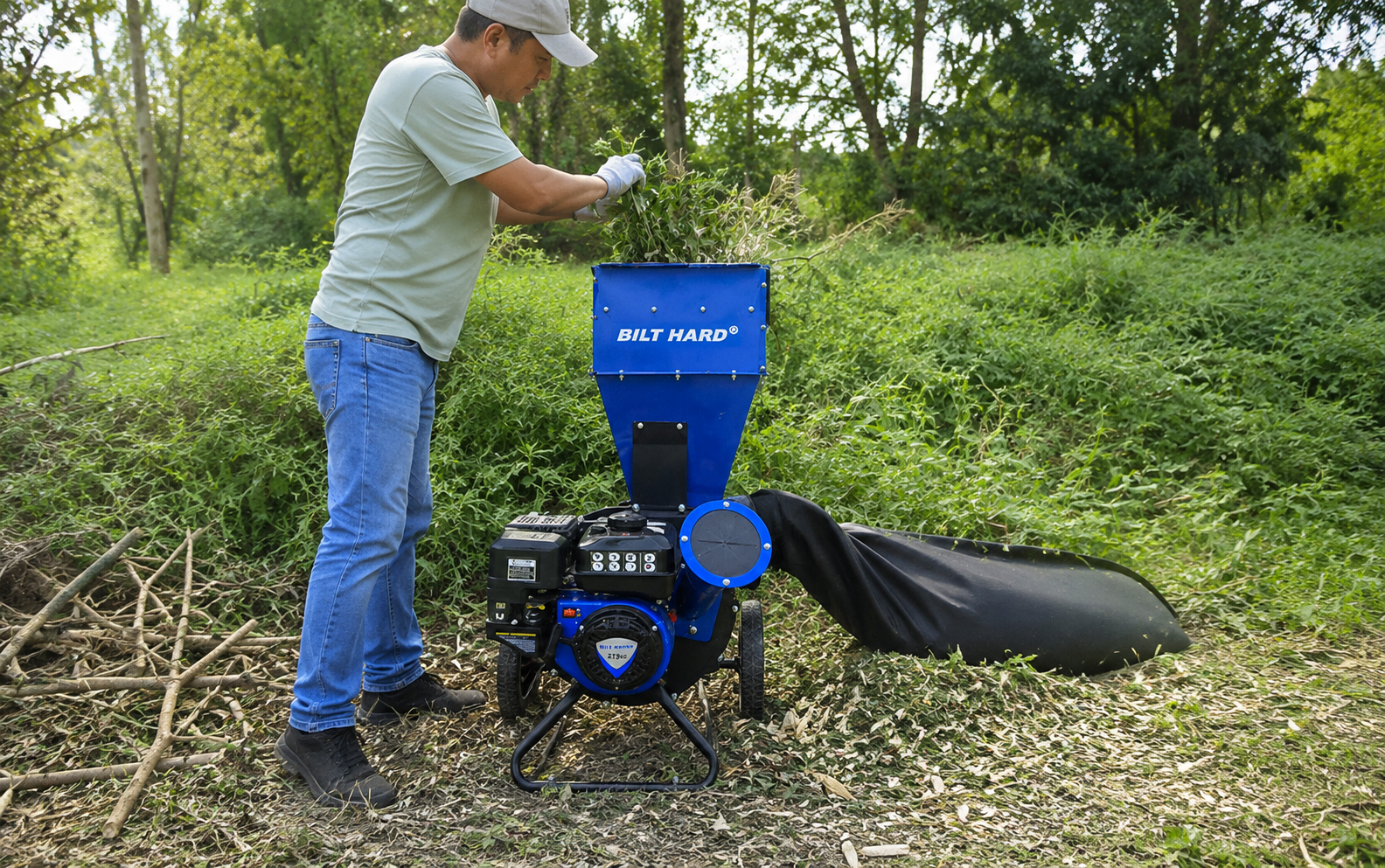
Table of Contents
Open Table of Contents
- Why BILT HARD Caught My Eye
- Specs Translated Into What They Actually Mean
- Real-World Testing: A Full Season
- The Check Window Feature (Why It Matters)
- Three Things I Don’t Love
- Maintenance Rules
- Who Should Buy the BILT HARD 7.5HP
- BILT HARD vs the Competition
- First-Start Checklist
- After Six Months
- A Few Questions Worth Answering
Why BILT HARD Caught My Eye
I’d never heard of them before I started shopping. Not a home center brand, not a name people throw around at the hardware store. But a few things stood out when I dug into the specs.
The 224cc engine is genuinely larger. Most 7HP chippers in this range run a 212cc engine. BILT HARD went with 224cc and rated it at 7.5HP — about 5.7% more displacement. That doesn’t sound like much until you’re pushing seasoned hardwood through and the engine doesn’t slow down. Real torque difference.
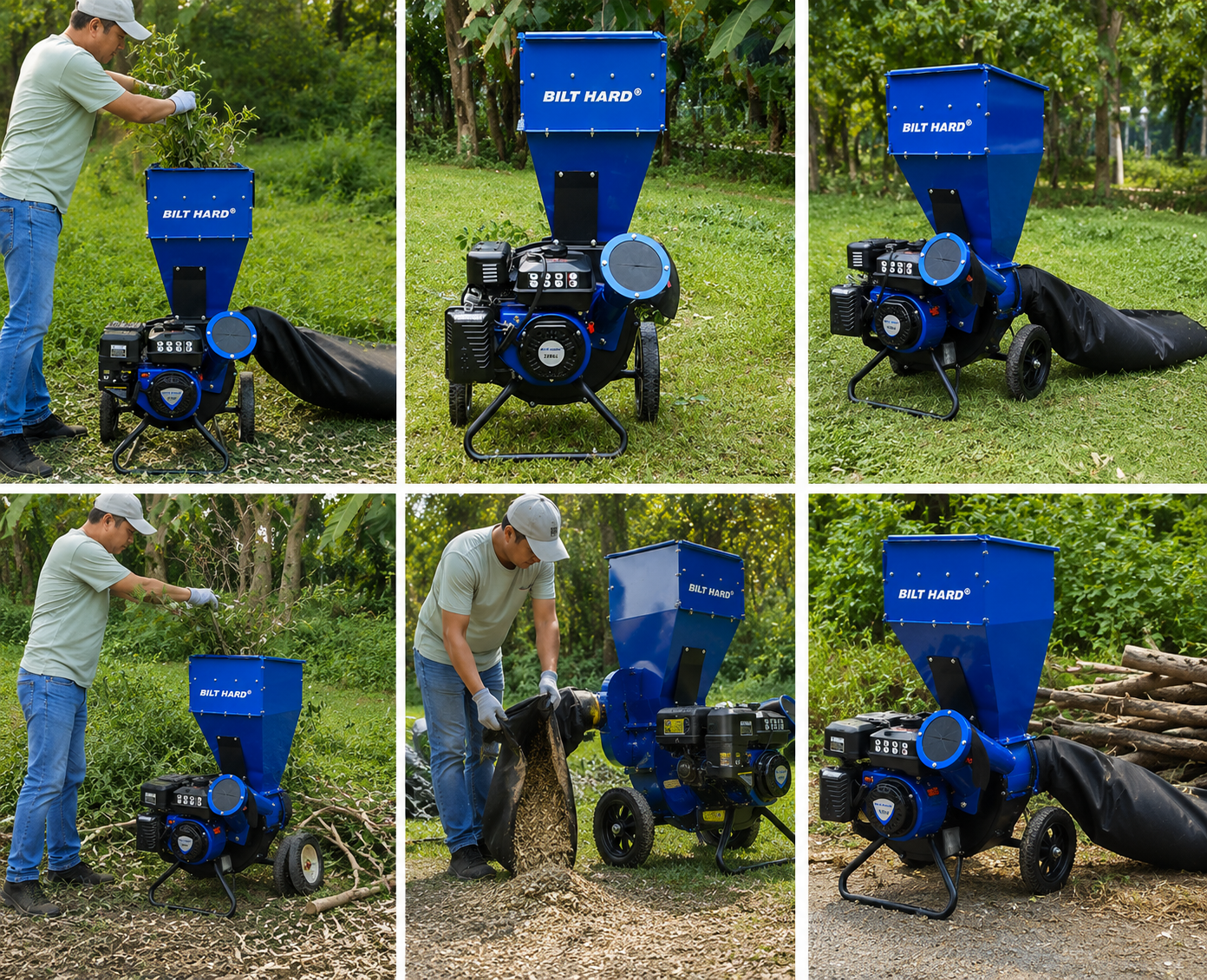
The dual-hopper design isn’t an afterthought. A lot of “2-in-1” chippers have a top shredding slot that’s essentially decorative — too small to be useful. BILT HARD’s top hopper is wide and deep enough to take a real double-handful of material without staging it piece by piece.
The check window. This sounds minor. It isn’t. When your chipper jams at 7:30pm with light fading, the last thing you want is a 15-minute disassembly job. The BILT HARD has a side-mounted window that lets you clear a blockage — or inspect the blade — without pulling the hopper assembly off. One latch. Done.
No choke, no primer. The auto-choke and primer-free system means 1–2 pulls warm, 3–4 cold. My old Briggs needed six or seven cold pulls and a choke ritual that I never quite got right. Small thing on paper, real difference day to day.
For a broader category overview, my best chipper-shredder buyer’s guide covers all the major contenders at different power tiers.
Specs Translated Into What They Actually Mean
| Spec | Number | What It Actually Means |
|---|---|---|
| Engine | 7.5HP 224cc OHV 4-stroke | Bigger than the standard 212cc — meaningful power difference |
| Fuel | 87+ unleaded, no ethanol | Same rule as every gas chipper — don’t use E10 |
| Fuel capacity | 0.95 gallons | Slightly larger tank than 212cc competitors |
| Max wood diameter | 3 inches | Real-world limit ~2.75” for dense hardwood |
| Design | Dual-hopper (top + side) | Shred small material + chip branches without changing modes |
| Check window | Yes, side-mounted | Clear jams in 60 seconds instead of 15+ minutes |
| Starting system | Auto-choke, no primer | 1–2 pulls warm, 3–4 cold |
| Collection bag | Included | Most competitors charge extra for this |
| Weight | ~118 lbs | Movable by one person on flat ground |
| Wheels | Heavy-duty pneumatic | Real tires, not the plastic-and-foam stuff |
The 0.95-gallon tank is one of those details that quietly matters. Standard competitors with 0.7-gallon tanks give you roughly 2–2.5 hours of runtime. This one gets closer to 3–3.5 hours per fill. When you’re working through a serious brush pile, that extra hour means one less interruption mid-session.
Real-World Testing: A Full Season
Six months of running this through everything my property threw at it.
Session 1: Post-Storm Cleanup
A spring storm dropped a 35-foot maple branch in my front yard. After chainsaw work, I had a mixed pile — leafy ends, branches in the 1–2” range, and a handful of pieces up to 2.75”.
I started with the side chute for the branches. The auto-feed pulled them in clean at anything over about 1.25”. The 2-inch pieces barely made the engine breathe harder. The 2.75” pieces needed more patient feeding but didn’t stall it once.
After the branches were done, I switched to the top hopper for twigs and leafy ends. That’s where the dual-hopper earns its keep. Tiny twigs fed into a side chute don’t engage the blade properly — they get lost. Through the top hopper, they hit the rotor at the right angle and actually process.
About 2.5 hours of runtime. Pile gone. Half a wheelbarrow of mulch to show for it.
Session 2: The Honest Hardwood Test
I wanted to know what the extra displacement actually bought. Got a load of seasoned white oak from a neighbor — tree taken down two years prior, bone dry, 2.5–3” pieces.
I’d used a 212cc GARDENBEAUT on similar material a few months earlier. Comparison:
- 212cc on 2.5” dry oak: noticeable engine lug, chunkier chip output, needed short incremental feeding
- 224cc on 2.5” dry oak: minimal slowdown, consistent chip output, handled slightly longer feed lengths
Neither engine is a commercial machine. Both can do the work. But the 224cc does it without sounding like it’s struggling. Long-term that probably matters for engine life.
The 3” oak pieces required patience from both engines. The 224cc handled them with a bit more composure.
Session 3: Fall Leaf and Garden Cleanup
Dry leaves through the top hopper: handled well. The opening is wide enough for two-handed grabs without staging. Output was fine shred, compost-ready.
Wet leaves: still a problem — same as every gas chipper. Clumps and clogs. The fix is spreading material on a tarp for a day before processing.
Garden stalks — tomatoes, sunflowers, dried herbs — all went through the top hopper cleanly.
For pure leaf volume, an electric chipper-shredder is probably a better tool. This machine was built to chip first. Leaves are a bonus, not its main event.
For composting-specific guidance on chip sizes and materials, my wood chipper for composting guide gets into the details.
The Check Window Feature (Why It Matters)
Nobody talks about this enough, so I’m going to.
Chippers jam. Not might — do. A forked branch goes in sideways. A piece of vine wraps the rotor. A knotty chunk doesn’t break clean. On a standard chipper, clearing that jam looks like this:
- Shut off the engine
- Wait for the rotor to fully stop (30+ seconds)
- Disconnect the spark plug wire
- Remove 4–6 hopper bolts
- Lift the hopper assembly off
- Clear the jam
- Put everything back together
That’s 15–20 minutes. Per jam.
On the BILT HARD:
- Shut off the engine
- Wait for the rotor to stop
- Disconnect the spark plug wire
- Open the check window (one latch)
- Clear the jam
- Close the window
Sixty to ninety seconds.
Run this machine regularly and you’ll jam it three or four times a session. The time savings stack fast. It’s also how you check and replace blades — open the window, look at the edge, decide. No disassembly.
Three Things I Don’t Love
1. Customer Service Is a Gamble
BILT HARD isn’t Briggs, Honda, or Husqvarna. Some buyers report solid warranty experiences. Others report slow responses and runaround. I haven’t needed to contact them — the machine has been reliable — but if post-sale support factors heavily into your decision, know that you’re buying from a smaller manufacturer with a mixed track record on that front.
Practical advice: register the product immediately. Keep your receipt. If something goes wrong, document it with photos before reaching out. The 1-year warranty is standard, but actually using it requires you to do the paperwork properly.
2. Assembly Takes Longer Than Expected
Budget 90 minutes to two hours. The instructions are translated and occasionally unclear. The hardware bag is complete but not well labeled.
The things that slowed me down: leg bracket orientation that isn’t obvious from the diagram, discharge chute positioning that has multiple options (pick carefully before you tighten), and a check window latch that requires a specific assembly sequence the instructions don’t spell out clearly.
3. The Engine Is BILT HARD’s Own Design
Most chippers in this price range run a Honda GX200 clone. Same engine, different badge — parts are everywhere, any small engine shop knows them.
The BILT HARD 224cc is their own casting. Basic maintenance items — air filter, spark plug, oil — use common sizes and aren’t an issue. But if you need a specific carburetor jet or gasket in five years, you may be ordering direct from BILT HARD rather than picking it up locally.
In practice this matters less than it sounds. The architecture is similar to industry-standard designs. But it’s worth knowing if long-term parts availability is a priority for you.
Maintenance Rules
The most important rule for this machine — for any gas chipper — is ethanol-free fuel only.
E10 (standard pump gas) contains 10% ethanol. Ethanol absorbs moisture. That moisture sits in the carburetor over winter. It eats the carburetor from the inside. This is the number one way these engines die, and it’s completely preventable.
Options:
- Ethanol-free 87+ at marinas, dedicated pumps, some hardware stores
- Pre-mixed canned fuel (TruFuel, VP Small Engine Fuel) at $8–10/quart
- E10 with Stabil added, if you have no other option
- Full carb drain before any storage period over 30 days
Everything else:
First oil change at 5 hours. Engine break-in. SAE 10W-30 for most climates.
Subsequent oil changes every 25 hours or annually. Whichever comes first.
Air filter check every 4–5 hours. Chipping makes dust. A clogged filter kills the engine slowly, then suddenly.
Blade inspection every 10 hours via the check window. Easy on this machine.
Fuel drain or stabilizer before winter. Not optional.
Do these five things and this class of engine runs 8–10 years without major issues.
Who Should Buy the BILT HARD 7.5HP
Buy this if you:
- Want 224cc over the standard 212cc and the power difference matters to you
- Process a mix of branches and soft material (the dual hopper is genuinely useful)
- Value quick jam clearing and blade access
- Are comfortable with a smaller-brand support experience
- Plan to do basic maintenance yourself
Skip it if you:
- Need reliable brand support and parts from a Honda or Briggs dealer
- Have light suburban volumes — an electric chipper is simpler and quieter
- Only chip branches and don’t need a shredding hopper (a single-hopper design is fine — see my home use chipper guide)
- Regularly encounter wood over 3” (step up to a 4” model)
- Live somewhere with strict daytime noise rules (this runs at 95+ dB)
BILT HARD vs the Competition
vs SuperHandy Mini Wood Chipper: SuperHandy runs the standard 212cc vs BILT HARD’s 224cc. SuperHandy has stronger brand recognition and holds resale value slightly better. BILT HARD has more displacement and the check window. On raw performance, BILT HARD wins. On brand familiarity, SuperHandy wins. Full breakdown in my SuperHandy mini wood chipper review.
vs GARDENBEAUT S3: Both have check windows, which puts them in a narrow category together. GARDENBEAUT uses 212cc, BILT HARD uses 224cc. GARDENBEAUT’s assembly instructions are clearer in my experience. BILT HARD’s auto-choke starting is noticeably better in cold weather.
vs YERYORK Electric Chipper: Different tool for a different job. YERYORK wins on noise, maintenance, and startup simplicity. BILT HARD wins on capacity, portability, and the ability to work wherever you need it without an extension cord. More in my YERYORK electric chipper review.
First-Start Checklist
Things I learned the hard way or nearly did:
Add engine oil before first start. Ships dry. 18–20 oz of SAE 10W-30. Starting it dry destroys the engine in seconds — not an exaggeration.
Use ethanol-free fuel from the very first fill.
Run at idle for 5 minutes before putting it under load. Engine break-in.
Position the discharge chute before you tighten it. It’s adjustable, but once it’s bolted down you’ve committed.
Hearing protection — actual muffs, 25+ dB NRR. Foam plugs aren’t enough at 95 dB.
Don’t feed pine cones, palm fronds, vines, petrified wood, or fresh green material. They jam the rotor or wrap the shaft. The manual has a full exclusion list worth reading.
Feed technique matters. Long branches go in short increments. Let the rotor recover between pushes. Don’t force material.
After Six Months
Through a storm-cleanup season, regular maintenance sessions, and a full fall garden teardown — this machine has done everything I asked.
The 224cc has real headroom over 212cc competitors on hard material. The dual hopper is properly implemented. The check window has saved me hours of frustration I didn’t have to spend.
The brand is small, support is uneven, assembly is tedious. None of that has made me regret buying it.
At $650–750, it’s one of the more powerful options in the 3-inch class. If your property is hardwood-heavy and you’re running the machine regularly through mixed material, it’s worth a serious look.
Would I buy it again? Yes. Would I recommend it to my brother? Also yes. To someone who needs solid warranty backup? Probably not — pay more, get a brand-name unit.
Check the latest price on Amazon →
A Few Questions Worth Answering
Is 7.5HP actually better than 7HP for a residential chipper? Yes, and it comes from displacement, not marketing — 224cc vs 212cc. About 5.7% more. On light residential use you’d barely notice. On regular hardwood, the difference shows up in how the engine handles load. Less stress, more consistent output.
Can it actually handle 3-inch wood? Softer woods (pine, poplar, fresh maple) yes, consistently. Dense seasoned hardwood (oak, hickory) — practical limit is closer to 2.75 inches. The 224cc handles it better than 212cc competition, but it’s not a commercial chipper.
What’s the deal with BILT HARD’s brand reputation? Mixed. The product performs as advertised. The risk is on the support side. Buy knowing that, and protect yourself — register the product, keep receipts, document issues with photos.
How loud is it? Around 95 dB at the operator position. Standard for gas in this class. Hearing protection is mandatory. Most municipalities allow daytime operation, but check your local ordinance.
How often will I need to sharpen blades? In my use, blades stayed sharp for about 40 hours of mixed-material work before performance dropped. Hardwood-heavy use wears them faster. Blade swaps through the check window take about 15 minutes.
Can I store it outside? I wouldn’t. I keep mine in a shed with a tarp over the engine. If outdoor storage is unavoidable, cover the engine and drain or stabilize the fuel first.
This post contains Amazon affiliate links. If you purchase through them, I earn a small commission at no extra cost to you. I only recommend products I’ve personally tested.