My first compost pile was a disaster. Not because I didn’t water it or turn it — I did everything right. The problem was I threw in whole branches. Eight months later I dug into the pile and pulled out a stick that was still basically a stick. Slightly darker. A little softer at the ends. Still recognizably a stick.
That’s when I finally bought a chipper. And then spent way too long figuring out which one actually mattered for composting specifically — not just for making mulch, not just for “reducing volume,” but for producing output that a compost pile can actually process in a reasonable timeframe.
The short answer: it mostly comes down to reduction ratio.
Why Reduction Ratio Is the Only Spec That Really Matters Here
Most chipper reviews focus on engine power and branch diameter. Those matter too, but for composting, reduction ratio is the thing — it tells you how much your input material compresses into output chips. 15:1 means 15 cubic feet of branches becomes 1 cubic foot of chips.
Finer chips = more surface area exposed = faster microbial breakdown = a pile that actually finishes. A pile of 1/4-inch chips can reach the temperatures you need for hot composting (130°F+). A pile of whole branches? It’ll still be sitting there next spring.
The Three Machines Worth Considering
GardenBeaut S3 — the one I’d buy
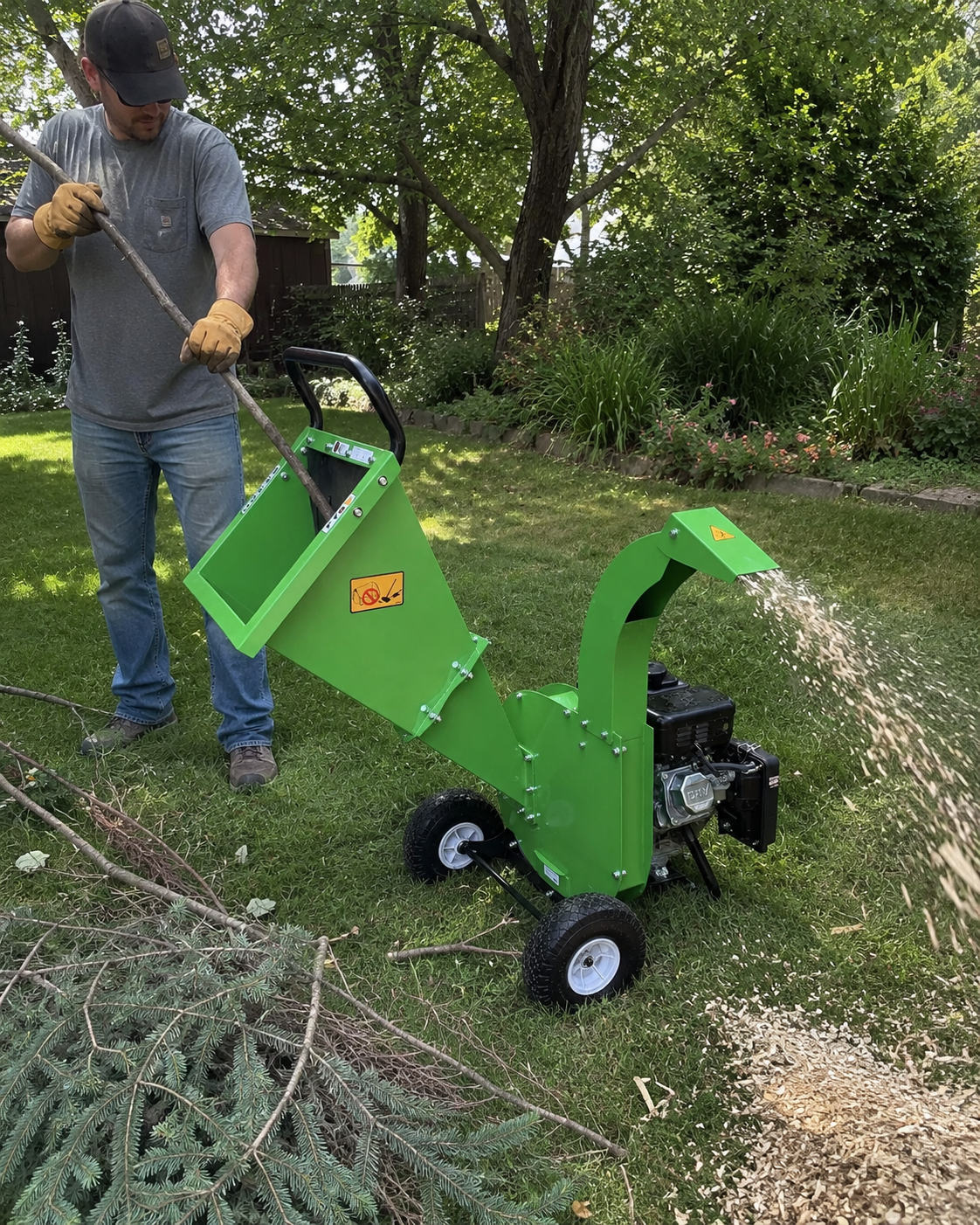
7HP, 212cc, 3-inch capacity, 15:1 reduction ratio. The S3 is my pick for anyone running a serious compost operation. The chip output is consistent — not random chunks that compost at wildly different rates, but a fairly uniform size that breaks down evenly through the pile.
The discharge chute adjusts from 90 to 145 degrees. That’s actually useful when you’re chipping directly into a bin — you aim the output instead of spending ten minutes raking chips off the lawn.
One caveat worth being upfront about: it does not like fresh green material. The manual lists pine cones, palm fronds, vines, and fresh greens as materials to avoid, and that’s not boilerplate — those things genuinely jammed our test unit. Run this machine on dry wood and dried leaves and it’s excellent. Try to force wet bark through it and you’re going to have a bad afternoon.
Also: ethanol-free fuel if you can get it. Small engines sitting between seasonal uses do not like ethanol residue in the carburetor.
As an Amazon Associate, we earn from qualifying purchases at no extra cost to you.
EFCUT C30 LITE — same core specs, slightly different machine
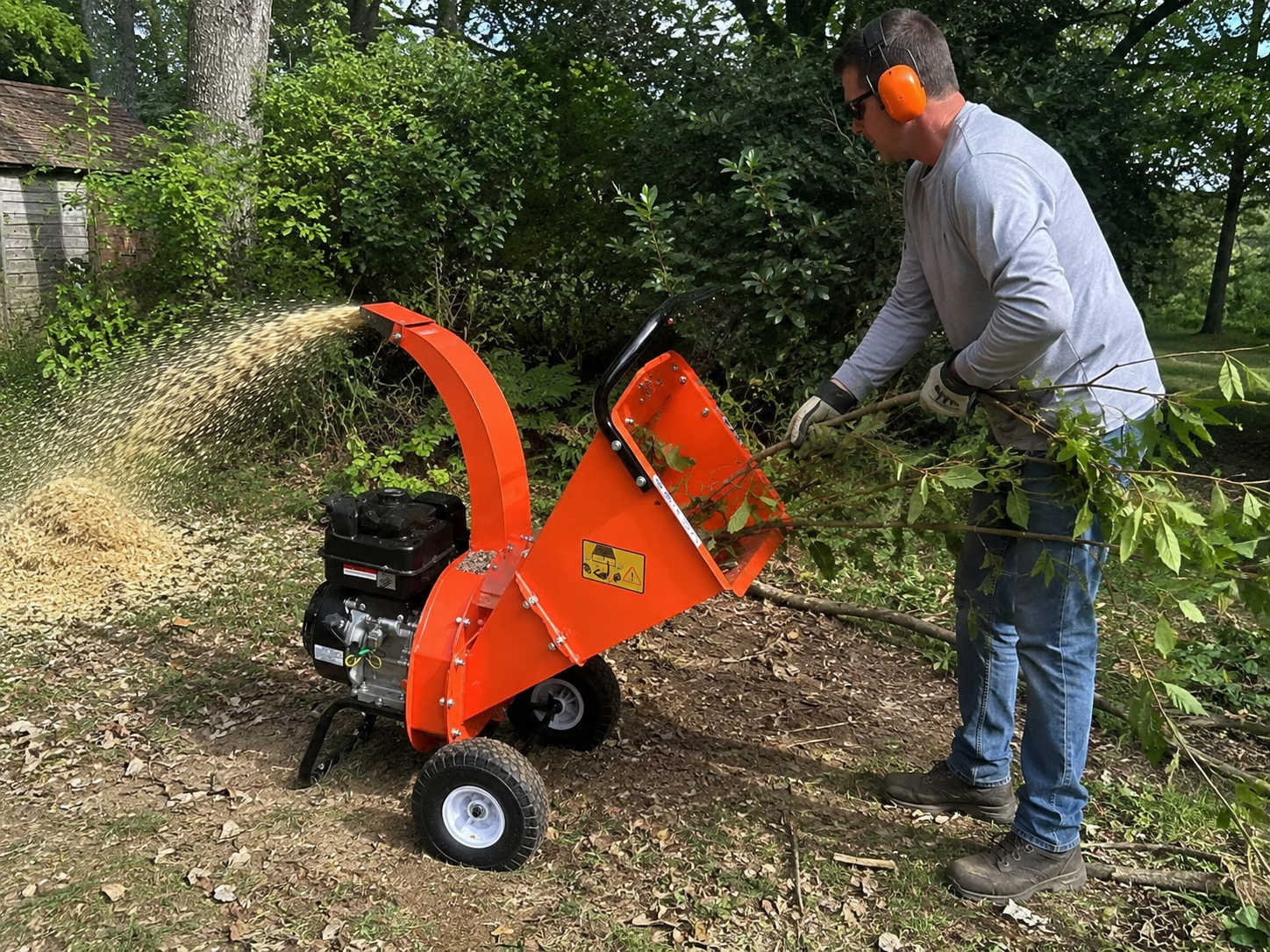
The C30 LITE runs the same 7HP 212cc engine class with the same 15:1 ratio. In terms of compost output quality, these two machines are essentially equivalent — during our compost trials, we found the chips went straight into our bins without needing any further processing.
Where it differs from the S3: the assembled footprint is slightly smaller, and the blade access design is better thought through. Chipper blades need replacement every season or two with regular use. Machines that make that process annoying add up over time. Having changed blades on all these machines, I can tell you the C30 LITE’s check window makes the job infinitely less miserable than wrestling with most competitors.
The one technique thing to internalize: feed speed. Don’t push branches in — let the feed mechanism grab and pull at its own pace. Once you’ve got the rhythm it runs cleanly for long sessions.
As an Amazon Associate, we earn from qualifying purchases at no extra cost to you.
Sun Joe CJ603E — counterintuitive pick for lighter feedstock
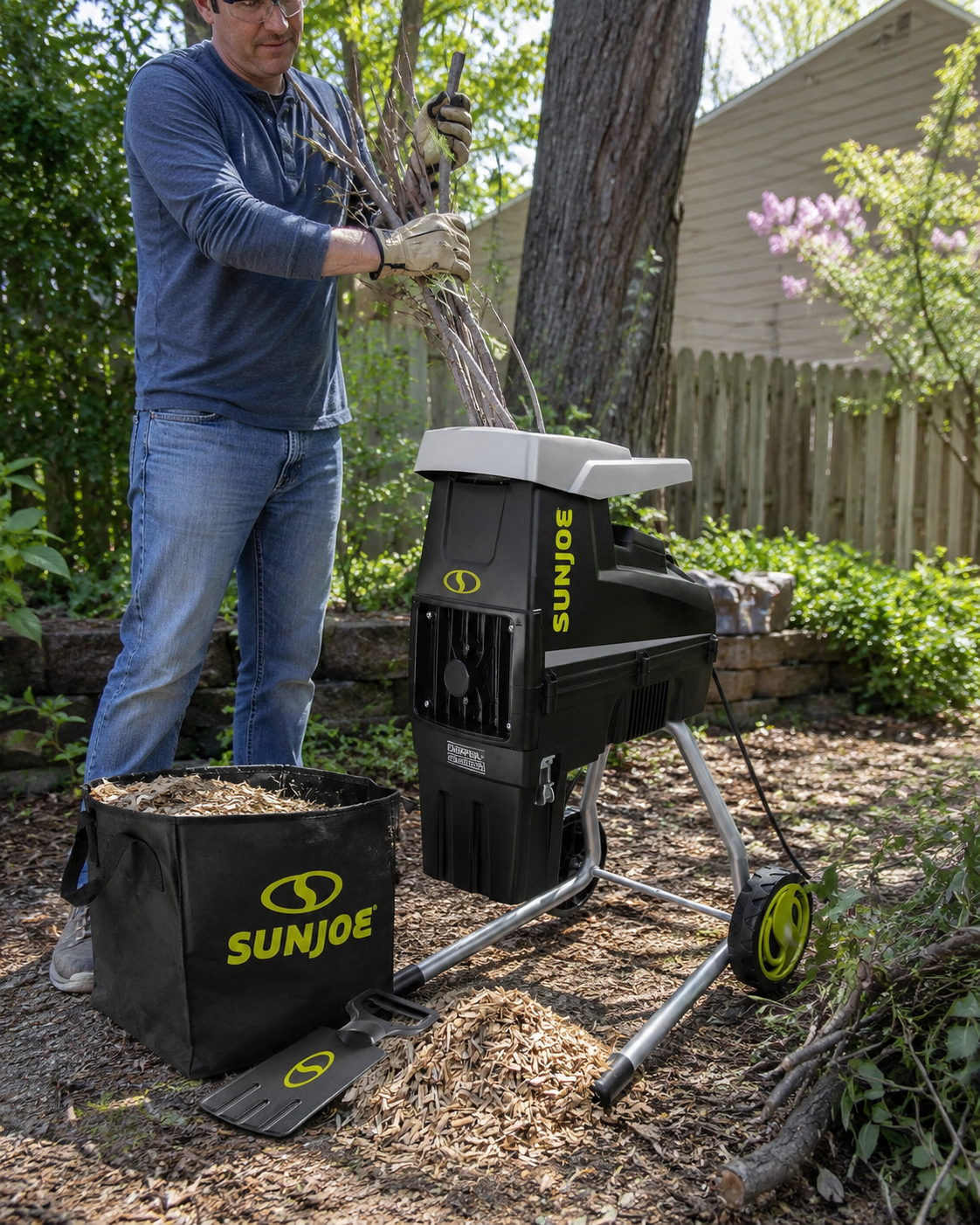
Here’s the thing that surprised me when I looked at the specs: the Sun Joe CJ603E has a 21:1 reduction ratio — higher than either gas machine. The catch is the branch diameter limit of 1.73 inches.
If your composting feedstock is mostly leaves, garden clippings, and thin twigs — which is genuinely most of what a backyard composter is processing — this machine produces finer output per unit of input than the gas options. 38 pounds, no fuel, quieter than a gas engine, and a two-year warranty. For an apartment dweller with a small plot or someone who just wants to compost kitchen and garden waste, this is probably the honest answer.
The hard limit is what it is though. Anything thicker than about 1.5 inches and it struggles. And running it from different spots in the yard means planning your extension cord situation — you’ll want a heavy-duty 100-foot cord minimum.
As an Amazon Associate, we earn from qualifying purchases at no extra cost to you.
Quick Comparison
| Model | Reduction Ratio | Max Branch | Power | Best For | Check Price |
|---|---|---|---|---|---|
| GardenBeaut S3 | 15:1 | 3” | Gas 7HP | Mixed dry yard debris, serious composting | View on Amazon |
| EFCUT C30 LITE | 15:1 | 3” | Gas 7HP | Same, with easier blade maintenance | View on Amazon |
| Sun Joe CJ603E | 21:1 | 1.73” | Electric 15A | Leaves and thin material, small gardens | View on Amazon |
Actually Getting This to Work in a Compost Pile
Dry the material first
Wet branches chip unevenly and bog down the machine. A week of drying makes a real difference — you get more consistent chip size and fewer jams. Fall cleanup is ideal because the debris has often been drying on the ground for weeks already.
Don’t try to make perfect chips
Compost works better with variation. Thick chips, thin chips, a handful of dried leaves run through together — the mix of sizes and carbon-to-nitrogen ratios speeds breakdown. Chasing uniform output is the wrong goal here.
Layer the chips with nitrogen
Wood chips are carbon-heavy. For fast composting they need nitrogen counterbalance: grass clippings, vegetable scraps, coffee grounds. The rough ratio is 3 parts brown (chips) to 1 part green by volume. Without the nitrogen layer, the pile will just sit there.
What goes through without problems vs. what doesn’t
Dry branches up to rated capacity, dried leaves, garden stalks, paper in small strips — all fine. Fresh green material, pine cones, palm fronds, vines, diseased plant material — avoid all of these. The “avoid fresh greens” instruction in most manuals is real, not just liability language.
The Science Part (Brief)
The reason this works is surface area. A 1-inch branch gives microbes access to its outer surface. Chip that into 1/4-inch pieces and you’ve exposed the interior — multiply surface area by a factor of 4 or more. More surface area means faster microbial activity, higher pile temperatures, and actual finished compost in 4-8 weeks instead of watching the same sticks decompose for two years.
For hot composting specifically — the kind that kills weed seeds and pathogens — chipped material is basically a requirement.
Questions That Come Up
What happens if I put grass clippings through the chipper? Don’t. Grass is too wet and fibrous and will clog the hopper immediately. Toss grass clippings directly into the pile — they break down on their own because of their high nitrogen content.
How long does chipped wood actually take to compost? With active pile management, 4-8 weeks in warm weather is realistic. Cold composting (no turning, minimal management) is more like 3-6 months. Compare that to whole branches in a passive pile: 1-2 years and they still might not be done.
Can I use the chips as mulch instead of composting them? Yes. Fresh chips as surface mulch work well — suppress weeds, retain moisture, break down slowly into organic matter. The one thing to avoid is tilling fresh chips into soil, which causes a temporary nitrogen draw-down. Surface application only.
Want to compare across all categories? Read our Best chipper shredder overall guide. Electric-only? See our Best electric wood chipper shredder roundup.
Affiliate disclosure: As an Amazon Associate, ChipperShredderHQ earns from qualifying purchases. Rankings are based on our independent hands-on testing and field experience. Sponsored placements do not influence recommendations.