Five machines, about 80 hours of actual yard work spread across different properties, branch sizes, and seasonal conditions. Not a controlled test. Real storm cleanup, real pruning piles, real composting goals.
One thing became clear pretty fast: most chipper shredder roundups treat everyone as if they have the same yard. A half-acre suburban lot with ornamental shrubs needs something completely different from a two-acre property with mature oaks. And neither of those is anything like a small farm clearing brush on a weekly basis. This guide covers all three scenarios, and the ones in between.
The Short Answer
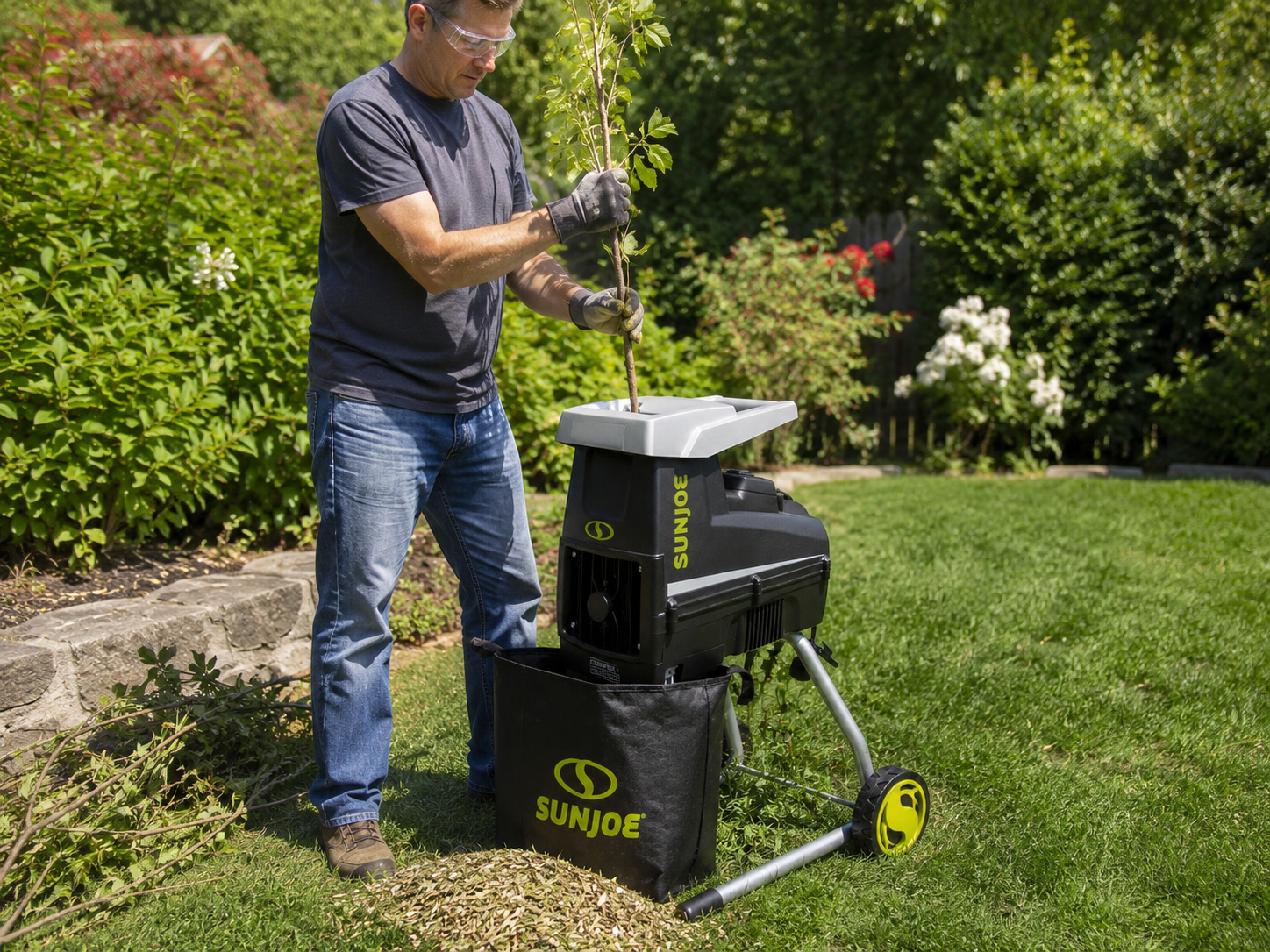
Sun Joe CJ603E — best for most homeowners. Electric, silent compared to gas, starts with a button, zero maintenance.
EFCUT C30 LITE — best gas chipper shredder if you need real power and have 2–3 inch branches to deal with.
GardenBeaut S3 — best for composting, specifically for people who run their chipper weekly and need it to stay reliable long-term.
EFCUT C40 — step up to this when 3-inch capacity isn’t cutting it. 9HP, 4-inch max.
MechMaxx B150 — 15HP, 6-inch drum chipper, towable. Not for most people. Absolutely right for the people who need it.
1 Best Overall: Sun Joe CJ603E
The CJ603E is the right answer for more situations than anything else on this list. 15-amp corded electric, handles branches up to 1.73 inches, produces a 21:1 reduction ratio, and every single time you plug it in and flip the switch, it runs.
That last part matters more than people give it credit for. Gas chippers sit in garages for months between uses. By the time you need one after a storm or at the start of spring cleanup, you’re dealing with a stale fuel problem, a fouled plug, or a carb that needs cleaning. The Sun Joe doesn’t care how long it’s been sitting. You plug it in, you chip.
The 21:1 reduction ratio is genuinely impressive — the finest chip output of any machine on this list. If you’re actively composting, that matters. Finer chips break down faster and integrate into compost piles better than the chunky output you get from some gas machines.
Specs worth noting: 38.6 pounds, automatic shutoff when you open the hopper, 2-year warranty.
Where it falls short is predictable. Anything regularly over 1.5 inches and you’re fighting the machine. It’s not built for mature oak or thick fruit tree prunings. If that describes your yard, you need gas.
As an Amazon Associate, we earn from qualifying purchases at no extra cost to you.
2 Best Gas Chipper Shredder: EFCUT C30 LITE
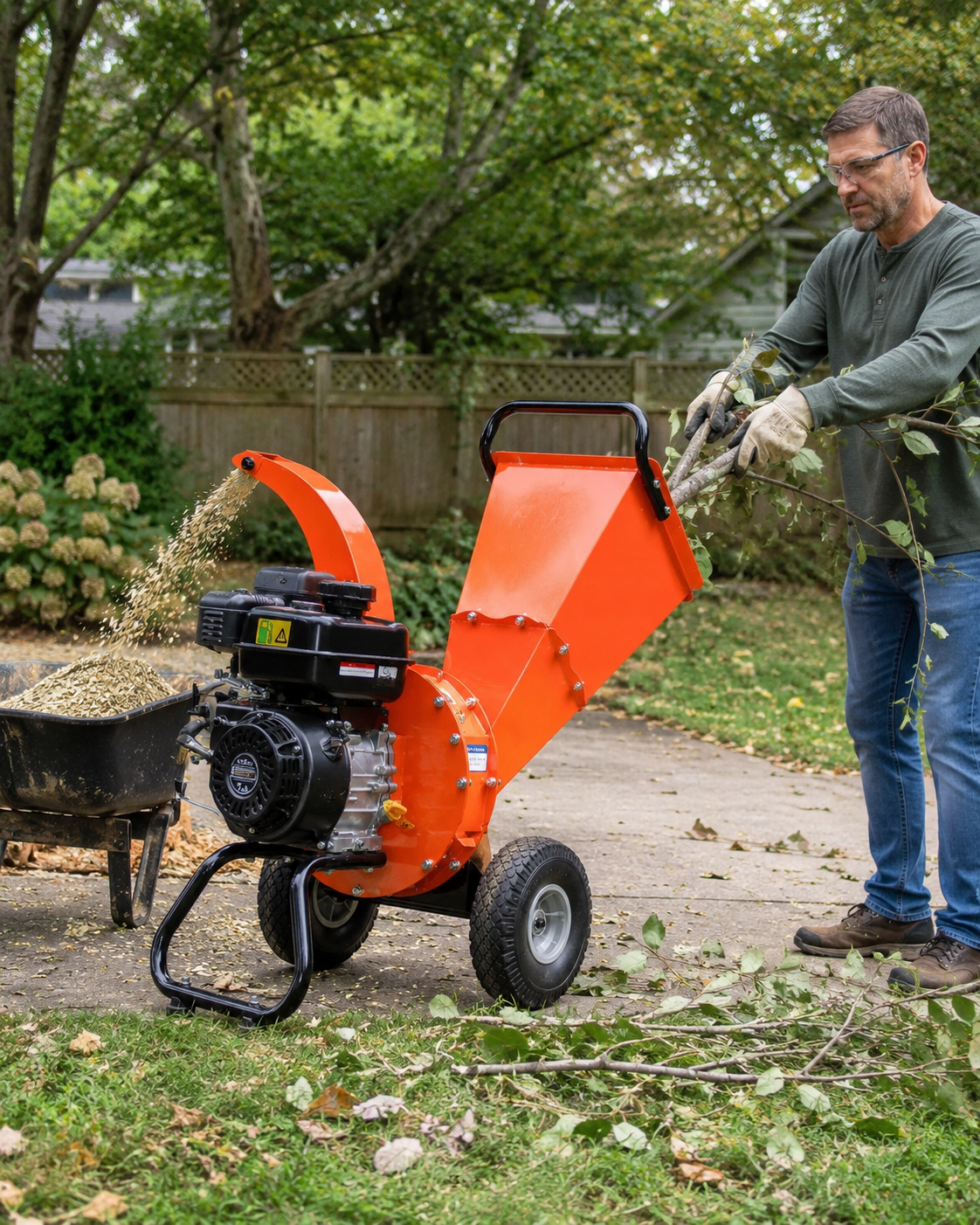
When electric isn’t enough, this is where I’d start. 7HP 212cc engine, 3-inch max capacity, 15:1 reduction ratio. EFCUT is part of ZMT, which has been building landscaping equipment for 15+ years, and it shows in the details — the blade-access check windows on this machine are the kind of thing only someone who’s actually maintained equipment in the field would think to include.
Long-term performance on this machine holds up in a way that’s unusual for this price class. The people who learn the correct feed technique — letting the machine pull the wood rather than pushing it — tend to run it for years without issues. The people who jam it repeatedly are usually pushing too hard too fast.
That’s the one honest thing to say upfront: there’s a learning curve. Rush it and you’ll clear jams every session. Work with the feed rate and you can run this thing all afternoon without stopping. Once you figure that out, it’s genuinely reliable cold-weather and all-season.
The C30 LITE is the compact version — slightly smaller and lighter than the full C30 when assembled. If storage space is a consideration, that’s worth knowing.
Best for yards from half an acre to two acres, homes with mature trees putting down 2–3 inch branch material, anyone doing extended cleanup sessions where gas runtime matters more than the convenience of electric.
As an Amazon Associate, we earn from qualifying purchases at no extra cost to you.
3 Best for Composting: GardenBeaut S3
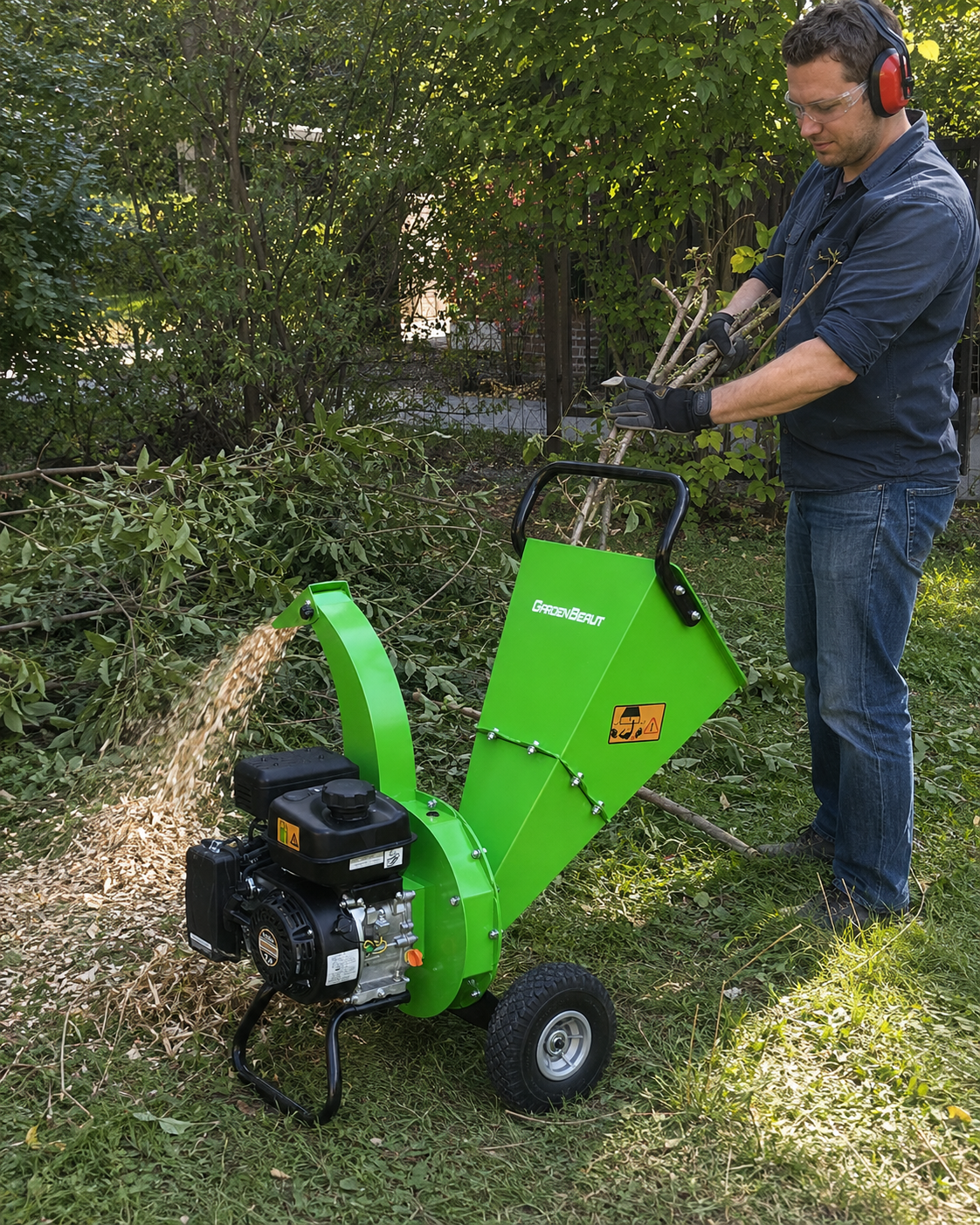
On paper this matches the EFCUT almost exactly — 7HP 212cc, 3-inch capacity, 15:1 ratio. The reason it gets a separate slot is what extended use actually looks like.
We’ve kept this machine in our active testing rotation for over a year, running it once or twice a week for multiple hours per session. First pull every time, performs the same as when new. That kind of consistency is rare in this price class, and it’s the main reason this earns the composting recommendation over the EFCUT — when you’re running a chipper weekly rather than occasionally, reliability compounds.
The adjustable discharge chute (90–145 degree range) is specifically useful for composting work — you can aim chip output directly into a bin or compost pile without constantly repositioning the machine. The EPA/CARB certification matters if you’re in California or any state with strict emissions rules.
The side-opening blade access design is also easier to deal with than competing machines that require more disassembly for maintenance. When you’re sharpening blades regularly because you run the machine weekly, that’s a real quality-of-life difference.
What to avoid: fresh green branches, palm fronds, pine cones, vines. The manual is specific about this and accurate. Dry wood runs through cleanly. Try to force fresh material and you’ll jam it and wonder what’s wrong.
As an Amazon Associate, we earn from qualifying purchases at no extra cost to you.
4 Best Big-Branch Capacity: EFCUT C40
The C40 is the step-up machine for yards where 3-inch capacity isn’t enough. 9HP 274cc engine, 4-inch max, 15.9-inch flywheel — that last spec matters because a larger flywheel stores more rotational energy and delivers more consistent power under heavy load. It’s why this machine handles 3–3.5 inch branches without the RPM drop you’d see in a 7HP machine pushing its limits.
At 2-inch dry hardwood the engine doesn’t even register the work. Moving up to 3.5 inches you can hear it working, but it doesn’t stall. That’s the practical difference between 7HP and 9HP in this application.
The blades on this machine are full high-speed steel — not just hardened edges on a softer core. They hold an edge longer and produce more consistent chips as hours accumulate. Worth noting if you’re planning to run the machine hard.
Pull-starting a 9HP engine takes noticeably more effort than a 7HP. We felt the difference immediately during our testing. Not a dealbreaker, but if physical strain is a concern for you, factor it in.
Good fit for properties with regular 3–4 inch branch material, small orchards, anyone who’s been fighting a 7HP machine and wants headroom.
As an Amazon Associate, we earn from qualifying purchases at no extra cost to you.
5 Best for Acreage and Heavy Work: MechMaxx B150
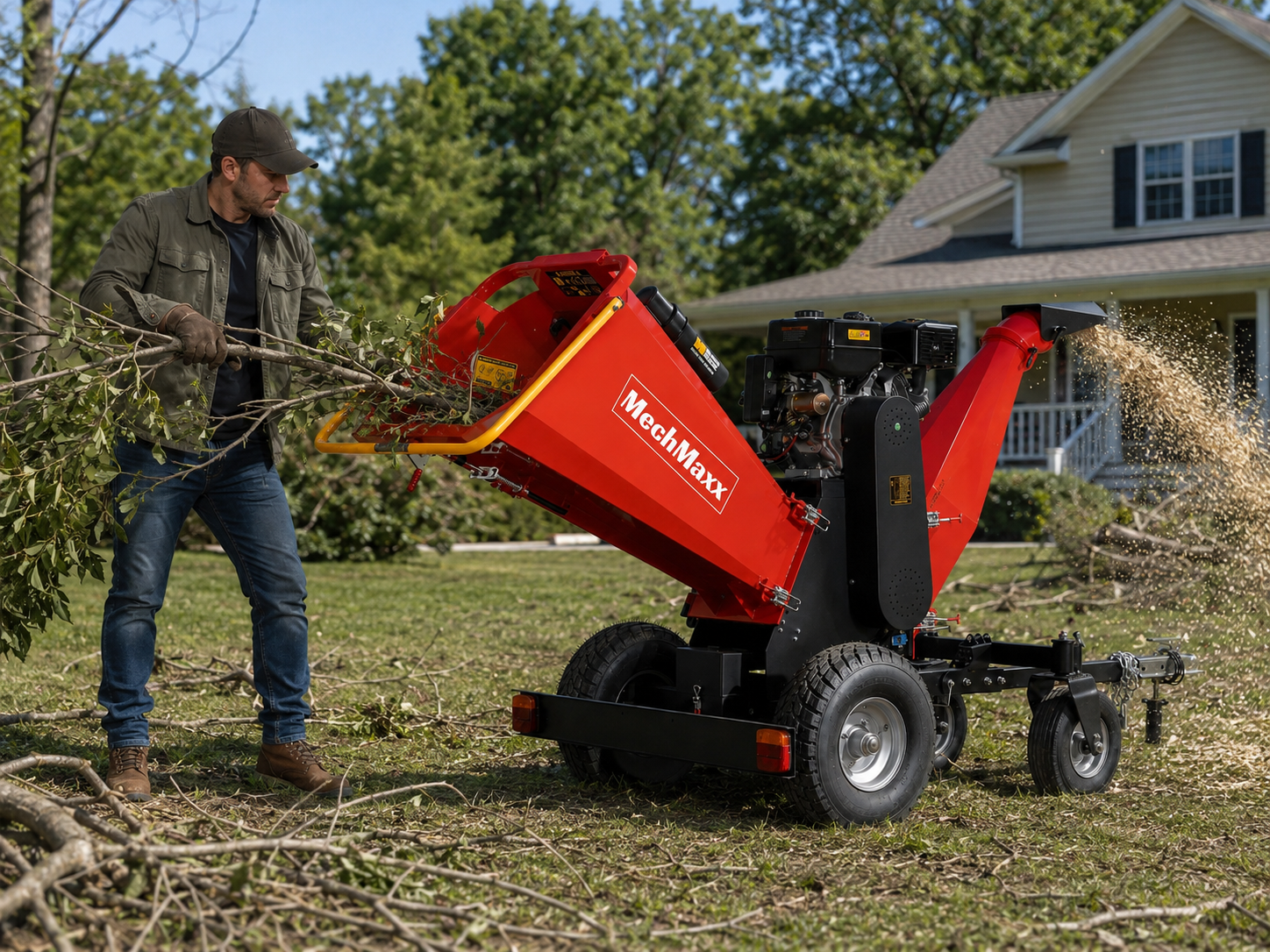
This one is in a different category from everything above. 15HP 459cc electric-start drum chipper, four wheels, towbar, DOT-legal tires with working tail lights, 6-inch max capacity. It weighs 573 pounds. This is not a residential chipper.
What it is: a professional-grade machine at a price point that most small farms and serious property managers can actually reach.
The 14-inch drum roller generates enough inertia that 3–4 inch branches feel almost effortless to the machine. Scaling up to 5 and 6 inch material — things that would destroy every other machine on this list — it handles routinely.
Electric start on a 15HP engine is a genuine quality-of-life feature. No struggling with a pull cord on a motor this size. Key turn, it fires.
The safety engineering is more thorough than you’d expect at this price: both an emergency stop button and an emergency stop bar, plus limit switches that shut down the engine when feed or discharge hatches open. That’s the kind of redundancy you see on contractor equipment.
Kevlar belts instead of standard neoprene on the drive system means less maintenance frequency and longer service intervals. The 2-year warranty on both the machine and the engine reflects that the manufacturer is confident in the build.
The 2-inch coupler tow bar with working tail lights means you can legally move this to a neighbor’s property, to a different part of a large farm, or to a job site. That matters in ways a stationary chipper doesn’t address.
Who this is not for: if you have a suburban yard and deal with branches twice a year, you’d be storing a 573-pound machine that the Sun Joe could have handled fine. The machine has to match the work.
As an Amazon Associate, we earn from qualifying purchases at no extra cost to you.
Full Comparison Table
| Model | Power | Max Branch | Reduction Ratio | Weight | Best For | Amazon |
|---|---|---|---|---|---|---|
| Sun Joe CJ603E | Electric 15A | 1.73” | 21:1 | 38.6 lbs | Most homeowners | View |
| EFCUT C30 LITE | Gas 7HP 212cc | 3” | 15:1 | Mid | Mid-size yards | View |
| GardenBeaut S3 | Gas 7HP 212cc | 3” | 15:1 | Mid | Composting, reliability | View |
| EFCUT C40 | Gas 9HP 274cc | 4” | 15:1 | Mid-heavy | Large branches, orchards | View |
| MechMaxx B150 | Gas 15HP 459cc | 6” | 20:1 | 573 lbs (towable) | Acreage, heavy work | View |
Buying Guide: Six Questions Worth Answering Before You Spend Anything
What’s the actual diameter of the branches you’re dealing with?
Measure them — not theoretically, not worst-case, the branches you actually need to chip in the next month. Under 1.5 inches consistently: Sun Joe. 1.5 to 2.5 inches: GardenBeaut S3 or EFCUT C30 LITE. 3 to 4 inches: EFCUT C40. Over 4 inches regularly: MechMaxx or commercial rental.
How often will you actually use it?
Weekly composting and routine garden maintenance — pay more for quality, you’ll get the value. Twice-a-year storm cleanup — focus on easy startup over specs. The Sun Joe excels for infrequent use because there’s nothing to maintain between sessions. A gas chipper that’s been sitting for six months before you need it is a maintenance problem first and a chipping tool second.
Where do you do the work relative to an outlet?
Electric is practical within about 100 feet of an outlet using a heavy-duty extension cord. Beyond that, voltage drop becomes a real issue and gas makes more sense. Be honest about where in your yard the branches actually are.
Do noise levels matter?
HOA neighborhoods or houses with close neighbors: electric without question. Gas machines run at 94–100 dB. At distance on a rural property that’s fine. On a Saturday morning with houses 40 feet on either side, it’s not.
Are you composting or just reducing volume?
For active composting, reduction ratio matters. The Sun Joe’s 21:1 output is genuinely better for compost integration than the 15:1 output from gas machines. If you’re just reducing volume for disposal or yard waste pickup, any machine on this list works.
What’s your realistic budget for ongoing maintenance?
Gas machines need oil changes, air filter cleaning, spark plugs, and occasionally carburetor work. That’s real time and real money across the life of the machine. Electric machines need blade maintenance only. The Sun Joe’s lower purchase price is actually closer to its real total cost than it might appear.
Electric vs. Gas: The Decision That Matters Most
The split is simpler than most people make it:
Get electric (Sun Joe CJ603E) if you have branches under 1.5 inches regularly, want push-button start and zero gas maintenance, live somewhere with noise constraints, or do shorter sessions where runtime isn’t a factor.
Get 7HP gas (GardenBeaut S3 or EFCUT C30 LITE) if you regularly deal with 2–3 inch branches, have mature trees with significant seasonal drop, work more than 100 feet from an outlet, or do extended sessions where gas runtime matters.
Get 9HP gas (EFCUT C40) when you consistently have 3–4 inch material. That’s not the same as occasionally having one big branch — it’s when that’s your regular workload.
Get the towable drum (MechMaxx B150) if 4–6 inch material shows up regularly, you’re managing 2+ acres or a small farm, or you need to transport the chipper between work sites.
FAQ
What’s the best chipper shredder for the money in 2026?
For most residential users, the Sun Joe CJ603E. Zero maintenance costs mean the long-term total cost of ownership is lower than it looks compared to similarly priced gas options. For users who need gas capacity, the GardenBeaut S3 and EFCUT C30 LITE are the value picks at that tier.
What’s the actual difference between a chipper and a chipper shredder?
A chipper cuts thick branches into chips. A chipper shredder also handles softer material — leaves, thin twigs, garden debris — through a separate shredding function. Every machine on this list is a chipper shredder.
How long do these machines realistically last?
The Sun Joe with proper maintenance: 5–10 years of residential use is realistic. The 7HP gas machines with regular maintenance: 500+ engine hours, which at 20–30 hours per year of residential use is 15–25 years. The MechMaxx B150 is built for higher-hour applications and carries a 2-year warranty on both machine and engine.
Can I chip directly into garden beds?
Yes, position the discharge chute over the bed. Fresh wood chips as surface mulch are good — they suppress weeds, retain moisture, and slowly improve soil. Don’t till them in while fresh (they tie up nitrogen as they break down). Surface application only for fresh chips.
Do these work on pine needles?
Dry pine needles run through the shredding function reasonably well. Green pine needles are too resinous — they coat blades and the discharge chute with sap. Dry them first. Pine cones shouldn’t go in at all.
How do I safely clear a jam?
Electric: unplug completely. Wait for everything to stop moving. Then open the hopper or access panel per the manual. Gas: kill the engine and wait for the flywheel to come to a full stop — it keeps spinning for several seconds after you shut it down. Never reach in while there’s any possibility of movement.
For more specific picks, see: best wood chipper for home use, best wood chipper for composting, and best electric wood chipper shredder.
Affiliate disclosure: As an Amazon Associate, ChipperShredderHQ earns from qualifying purchases. Rankings are based on our independent hands-on testing and field experience. Sponsored placements do not influence recommendations.