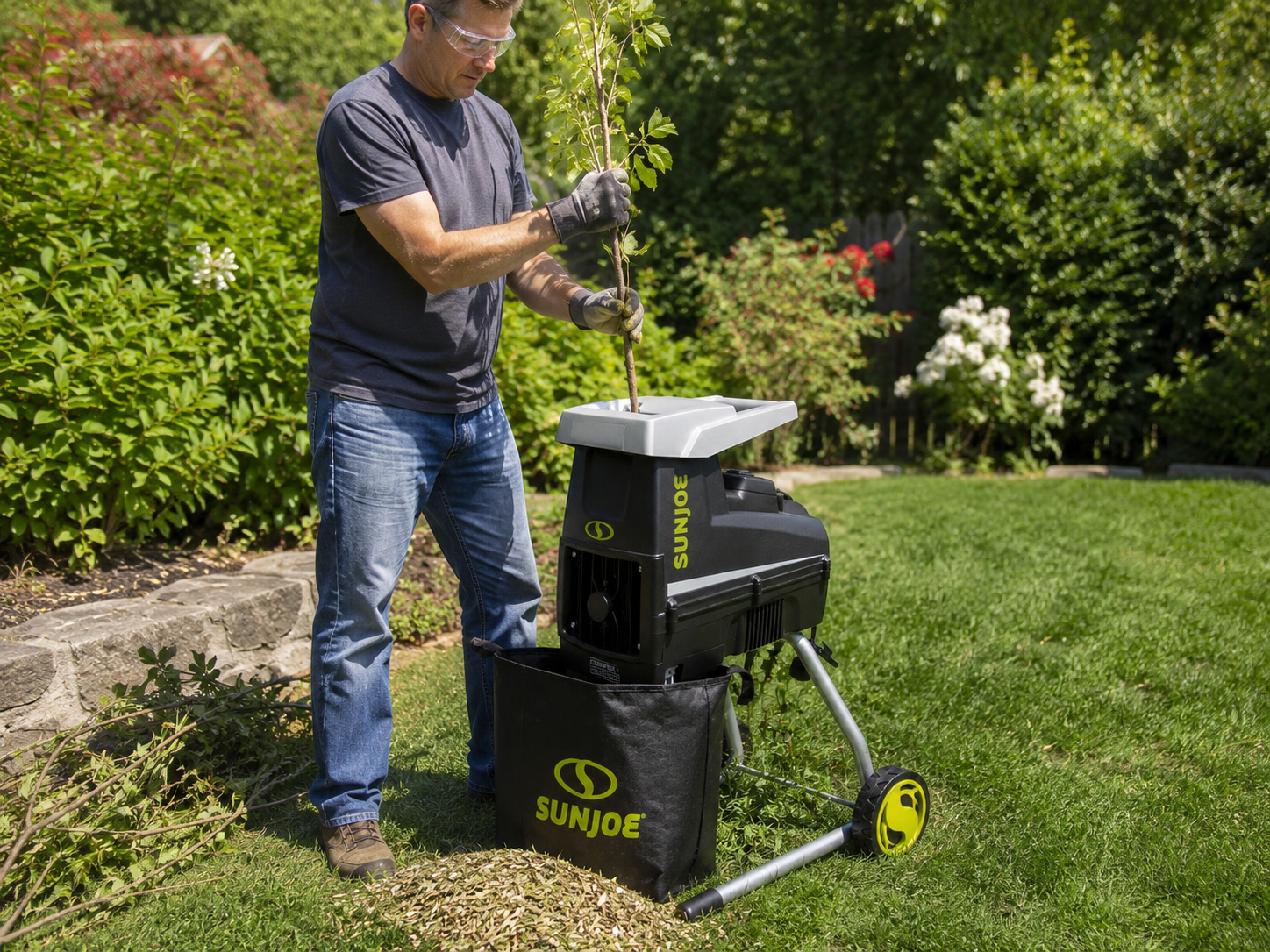
My neighbor spent twenty minutes trying to start his gas chipper last fall. Pull, cough, pull, flood, wait, pull again. By the time it actually ran, he’d sweated through his shirt and his wife had gone back inside.
I plugged mine in and pushed a button.
That’s the whole argument for electric, honestly. But there’s a real ceiling to what electric can handle, and I’ve watched people buy the wrong machine and regret it — so before you buy anything, you need to know where that ceiling is.
The Case for Electric (and Where It Breaks Down)
Electric chippers make sense for most suburban yards. If your pruning material is under 1.5 inches — ornamental trees, shrubs, rose canes, garden bed cleanup — electric does that job faster and with less friction than gas. No warm-up, no oil check, no storing fuel in the garage over winter.
The noise difference is also real. A 15-amp electric chipper runs at around 85-90 dB. A comparable gas machine runs 94-100 dB. In a neighborhood with houses close together, that gap matters. My HOA sent a letter about my old gas blower. Nobody’s complained about the electric chipper.
Zero emissions matters if you’re doing any chipping near a structure or in a partially enclosed space. Gas chippers make carbon monoxide. Electric chippers make noise.
Where electric breaks down: thick hardwood, fresh storm damage, anything over about 1.75 inches in diameter. If you have mature oaks or maples dropping branches, no electric chipper in the residential price range is going to handle them cleanly. That’s a gas machine job and there’s no workaround.
The One Electric Chipper Worth Buying: Sun Joe CJ603E
15 amps, 1.73-inch capacity, 21:1 reduction ratio, 38.6 pounds. Push-button start.
I’ve run this thing through ornamental cherry prunings, dried rose canes, oak leaves, thin maple branches, and a pile of dried sunflower stalks that had been sitting all winter. The chip output is fine and consistent — goes straight into the compost bin without any secondary processing.
The 21:1 reduction ratio is the spec that surprised me. That’s actually higher than most of the gas machines I’ve looked at in the same price range, which typically land at 15:1. The trade-off is branch diameter: the Sun Joe tops out at 1.73 inches, while a 15:1 gas machine handles 3 inches. Whether that trade-off works for you depends entirely on what you’re chipping.
Start-up is what it is on a corded electric — instant, every time, no drama. This sounds like a low bar, but after owning a gas chipper with a finicky carburetor, I have come to deeply appreciate tools that start when you push the button.
The safety design is worth noting: the hopper has an automatic shutoff the moment you open it. It cuts power before you can reach the blades. This is the feature that prevents the accidents that happen when someone tries to clear a jam with the machine still running.
Weight and mobility: 38.6 pounds with 7-inch wheels. One person can move it anywhere in the yard without help. Compare that to the 90-pound gas machines.
As an Amazon Associate, we earn from qualifying purchases at no extra cost to you.
What to watch out for
The 1.73-inch limit is the official rating, but the real comfort zone is closer to 1.25-1.5 inches. Dry, straight branches right at 1.73 go through without complaint. Wet branches, knotted wood, or anything with a significant fork at that size will bog the motor and often jam.
Wet material in general is the most common frustration with this machine. If you just had a storm and you’re dealing with fresh green branches, this isn’t the right tool for that day. Let it dry or rent a gas chipper for the heavy cleanup.
Extension cord is a real consideration. You need a 12-gauge cord rated for 15 amps — not the 16-gauge orange one from the hardware store, not whatever’s been coiled in your garage for a decade. A proper heavy-duty cord up to 100 feet is fine. Longer than that and you start getting voltage drop that hurts motor performance. Factor the cord into your budget if you don’t already have one.
The included collection bag works, but most people end up aiming the discharge chute directly into a bin or compost pile instead.
Electric vs Gas: Same Money, Different Machine
At similar price points, here’s what you actually get:
Electric gives you lower noise, zero maintenance headaches, instant start, and lighter weight. The ceiling is 1.73 inches and a cord that ties you within 100 feet of an outlet.
Gas at the same price gives you 3-inch capacity, no cord, and the ability to work anywhere on the property regardless of outlet access. The cost is noise, maintenance, fuel storage, and a machine that weighs twice as much.
If your property has mature trees with thick branches: gas. The Sun Joe will stall and frustrate you.
If your property is mostly ornamental planting, shrubs, and annual garden cleanup: electric handles it better for your specific use case, even if gas would technically do the job too.
When Gas Is the Right Answer
Skip electric if any of these apply to you:
Mature hardwood trees on the property. Oak, maple, walnut, hickory — anything dropping branches regularly above 1.5 inches. Get the GardenBeaut S3 or EFCUT C30 LITE instead.
Work site far from an outlet. Over 100 feet of extension cord and you’re fighting voltage drop. Gas doesn’t have that problem.
Storm cleanup. Fresh, large, green branches from storm damage are exactly the scenario where electric capacity falls short. Gas handles it, electric struggles.
Long continuous sessions. Electric motors heat up under sustained load. The Sun Joe is designed for residential burst use, not running four hours straight. Gas machines handle extended heavy sessions without complaint.
What the Specs Actually Mean
Amperage: 15 amps is the ceiling for standard 120V residential circuits. The Sun Joe is at that ceiling. If you see another residential electric chipper claiming more than 15 amps on a standard outlet, read the fine print carefully.
Reduction ratio: For composting specifically, the Sun Joe’s 21:1 is excellent. It means a pile of branches and leaves becomes a significantly smaller pile of fine chips that a compost pile can actually process. Most gas chippers in the same price range are at 15:1.
Noise: Electric chippers run 85-92 dB. Gas in the same power class runs 94-105 dB. The difference is audible to anyone nearby, and it’s the difference between “loud tool in the yard” and “neighbors considering whether to call someone.”
Maintenance: What You Skip With Electric
Gas chipper maintenance list you never have to touch:
- Oil changes
- Air filter cleaning and replacement
- Spark plug replacement
- Carburetor cleaning after winter storage
- Fuel stabilizer treatment
- Ethanol damage from sitting fuel
Electric chipper maintenance list: sharpen or replace blades every season or two, clean the hopper and discharge after each use. That’s it.
Performance Overview
| Spec | Sun Joe CJ603E | Typical 7HP Gas |
|---|---|---|
| Max branch diameter | 1.73” | 3” |
| Reduction ratio | 21:1 | 15:1 |
| Noise level | 85-90 dB | 94-100 dB |
| Start-up | Push button | Pull cord |
| Maintenance | Blade care only | Full engine upkeep |
| Operating range | 100ft cord | Unlimited |
| Zero emissions | Yes | No |
| Weight | 38.6 lbs | 85-100 lbs |
Questions That Come Up
What extension cord does the Sun Joe actually need?
12-gauge (AWG), rated for 15 amps, maximum 100 feet. The 16-gauge cords you find in the $15 bin at the hardware store will cause voltage drop and motor strain. Don’t use them. A proper 12-gauge 50-foot cord runs about $30-40 and it’s worth it.
Can it handle hardwood?
Dry hardwood branches up to about 1.5 inches, yes. Above that in diameter, or anything that’s wet or green, and you’re going to jam it or bog the motor. Hardwood above 1.5 inches is a gas machine job.
How long does it last?
No combustion engine means the most common failure point in gas machines doesn’t exist. With clean blades and dry storage, residential electric chippers regularly run 5-10 years of seasonal use. The blade replacement cost is the main ongoing expense.
Is the collection bag worth using?
It works, but aiming the discharge chute directly into a compost bin is easier for most setups. The bag fills up quickly with light material like dry leaves and needs frequent emptying.
Does it actually chip leaves or just jam on them?
Dry leaves go through fine, especially mixed with a few thin branches. Very wet, freshly raked leaves will cause discharge chute buildup. The fix is to let them dry a day or mix them with dry material before running them through.
Need more branch capacity than electric can offer? Our best wood chipper for home use guide covers gas options at the residential level. For a full comparison across all power classes, see our best chipper shredder overall guide.
Affiliate disclosure: As an Amazon Associate, ChipperShredderHQ earns from qualifying purchases. Product rankings reflect honest testing and research, not sponsored placements.